
 For more information on Hepatitis A or to report individuals with vomiting, diarrhea, or fever associated with food consumption, contact:
Email: dehwebmain@acgov.org
Phone: (510) 567-6700
Website: https://www.acgov.org/aceh/
What is Hepatitis A?
Hepatitis A is a liver infection caused by the Hepatitis A virus, which is highly contagious. It can cause liver disease lasting a few weeks to a serious illness lasting many months.
A person infected with Hepatitis A typically misses work for up to a month.
What are the symptoms of Hepatitis A?
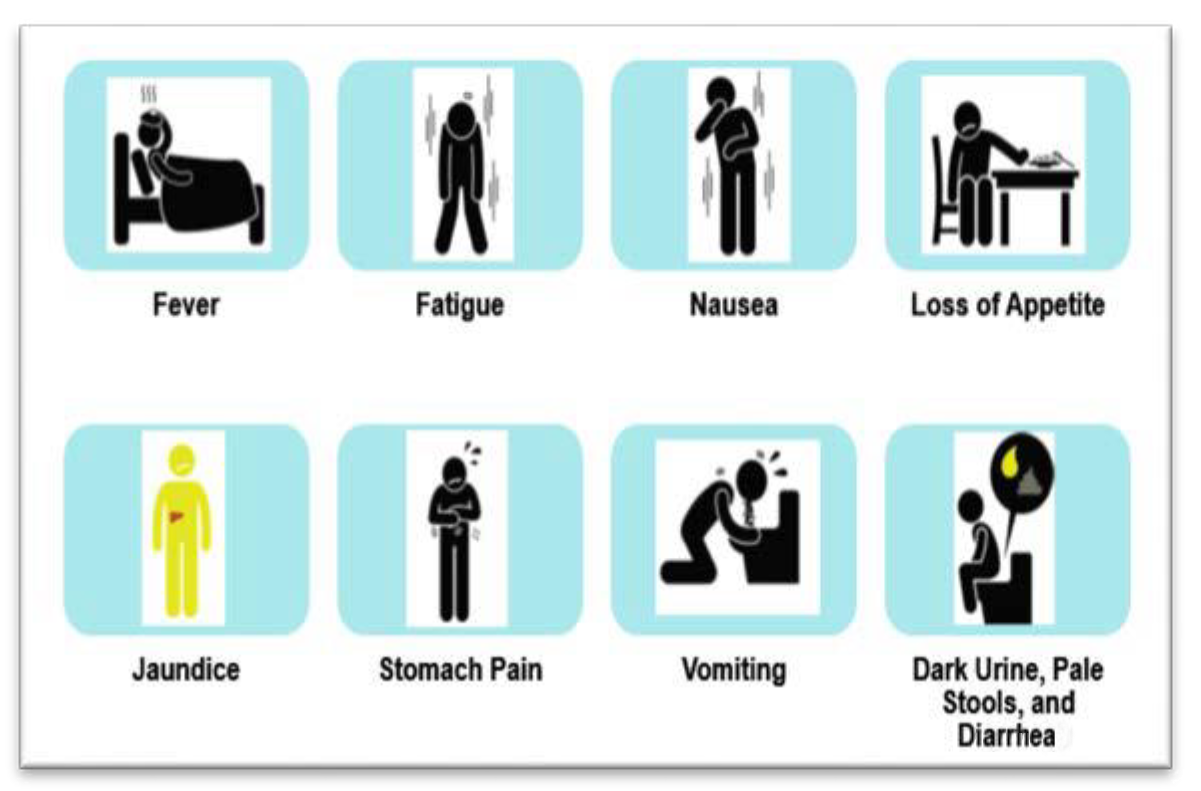
How can it spread in a food facility?
Hepatitis A is usually spread from person to person, through the fecal-oral route. This means, by ingesting fecal matter, even in microscopic amounts from:
- Close person-to-person contact with an infected person
- Touching objects or eating food handled by someone with Hepatitis A
- Touching common surfaces that a person with Hepatitis A has touched
How can I protect my customers?
| GET VACCINATED | A vaccination is available through your health care provider. |
| DO NOT WORK WHEN ILL | Help prevent the spread of illness by ensuring staff do not work when they are ill. Contact the Alameda County Environmental Health Department (EHD) if two or more staff are ill with gastrointestinal symptoms or if a staff member is diagnosed with a reportable illness. Hepatitis A is a reportable illness. Call (510)-567-6700 |
| ALWAYS PRACTICE PROPER HANDWASHING | Food employees shall thoroughly wash their hands and arms with soap and warm water for at least 20 seconds. Thoroughly rinse with clean running water and properly dry their hands and arms. Ensure handwashing signs are posted at the appropriate locations and do not use hand sanitizer to replace handwashing. |
| USE PROPER DISINFECTION WHEN NEEDED | Follow procedures listed on the reverse page. |
When do I need to disinfect my food facility?
- When the food facility has been exposed to Hepatitis A or there is concern of exposure
- When there was a fecal or vomiting incident anywhere in the facility
How do I disinfect my food facility for Hepatitis A?
Effective Disinfectants
Unscented Chlorine Bleach: Mix a chlorine solution and use promptly.
- 500 ppm: 1/4 cup bleach in 1 gallon water
- Use for stainless steel, food/mouth contact items, tile floors, nonporous surfaces, counters, sinks and toilets.
- Apply disinfectant every 4 hours during operation.
Other Disinfectants:
To determine if a product is effective against Hepatitis A, review the product label or product specification sheet and ensure it states “effective against Hepatitis A” or “effective against Feline Calicivirus”. You may also search a product’s name in the Environmental Protection Agency’s registered product database at: https://iaspub.epa.gov/apex/pesticides/f?p=PPLS:1
Steps to Clean Spills of Vomit or Feces
- Put on personal protective equipment, including two sets of gloves, masks.
- Block-off area immediately.
- Clean up visible vomit or feces using disposable absorbent material (paper towels or other type of disposable cloths) and minimize aerosols.
- Discard soiled items carefully in an impervious plastic bag.
- Thoroughly clean affected area.
- Disinfect area and objects surrounding the contamination with an appropriate disinfectant effective against Hepatitis A. See “Effective Disinfectants”.
- Take off outer set of gloves, and mask, in that order, and discard before exiting contaminated clean-up area.
- Place discarded PPE in an impervious plastic bag.
- Wearing the inner set of gloves, transport bag to a secure trash container; do not allow the bag to come into contact with clothing.
- Always wash your hands after handling any contaminated material, trash or waste.
Proper Handling
- Use chemicals in well-ventilated areas.
- Avoid contact between incompatible chemicals.
- Prevent chemical contact with food during cleaning.
- Handle contaminated material as little as possible and with minimal agitation to reduce aerosols.
- Manage waste safely and dispose in a secure trash container.
Other Recommendations if there is Concern of Hepatitis A Exposure
- Protect single service utensils
- Limit bare hand contact and self-service food items
- Clean public or common areas with these heightened disinfection procedures once per day
- Ensure employees wear gloves when cleaning, then remove the gloves and wash hands prior to switching tasks