
About Rabies
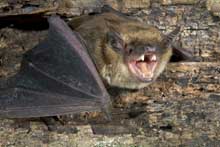
Rabies is a serious infection of the nervous system caused by a virus, known as Rabies virus. The virus is usually transmitted to humans by a bite or scratch from a wild infected animal, most commonly, a bat or a skunk. Rabies almost always results in death if a bite or scratch from a rabid animal (an animal infected with rabies) is not treated at the time of exposure and symptoms of an infection develop.
Between 2019 and 2025, twenty-seven (27) bats tested positive for rabies in Alameda County. However, skunks, raccoons, foxes, dogs and cats also can be infected with rabies. A few cases of rabies have been reported in wolves, coyotes, bobcats, ferrets, cattle, horses, goats, and sheep. Small rodents such as hamsters, squirrels, chipmunks, mice, and rabbits are very rarely infected with rabies.
Reported Animal Rabies in California by County and Species (Provisional)
How is Rabies spread to humans?
Rabies is transmitted to humans and other animals through close contact with saliva from infected animals (i.e. bites, scratches, licks on broken skin and mucous membranes). Person-to-person spread is very rare.
Vaccination of animals against rabies and not feeding or handling wild or stray animals are the primary methods of rabies prevention. California regulations (H&SC §121690, CCR Title 17 §2606.4) require all dogs to be licensed and vaccinated against rabies. It is strongly recommended that all cats, ferrets, and, in some cases, livestock, be vaccinated as well.
Rabies: What You Need to Know (CDPH) | https://www.cdph.ca.gov/Programs/CID/DCDC/Pages/Rabies.aspx
Control Activities in Alameda County
Alameda County Health, Public Health Department (ACPHD) helps health care providers determine potential risk of rabies exposure, tests animals for rabies, and advises on management of human rabies exposures. The Alameda County Vector Control Services District leads activities related to wildlife management and domestic animals rabies control, such as trapping, investigating, quarantining of both wild and domestic animals suspected of having rabies, educating the public on preventing rabies, approving pet rabies vaccination exemptions, and monitoring local animal control agency activities.